
The Circular Economy
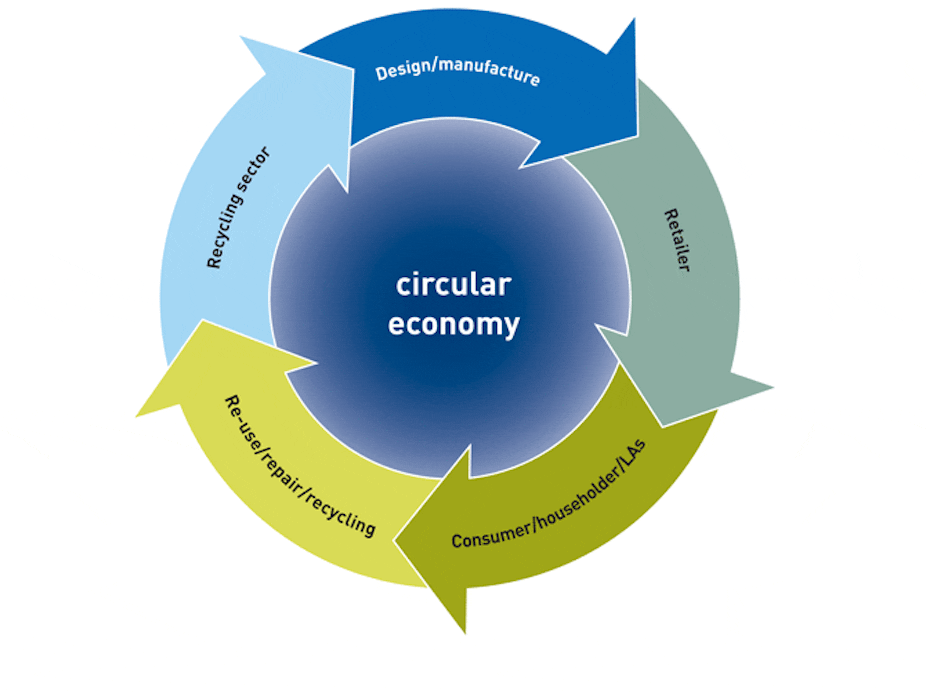
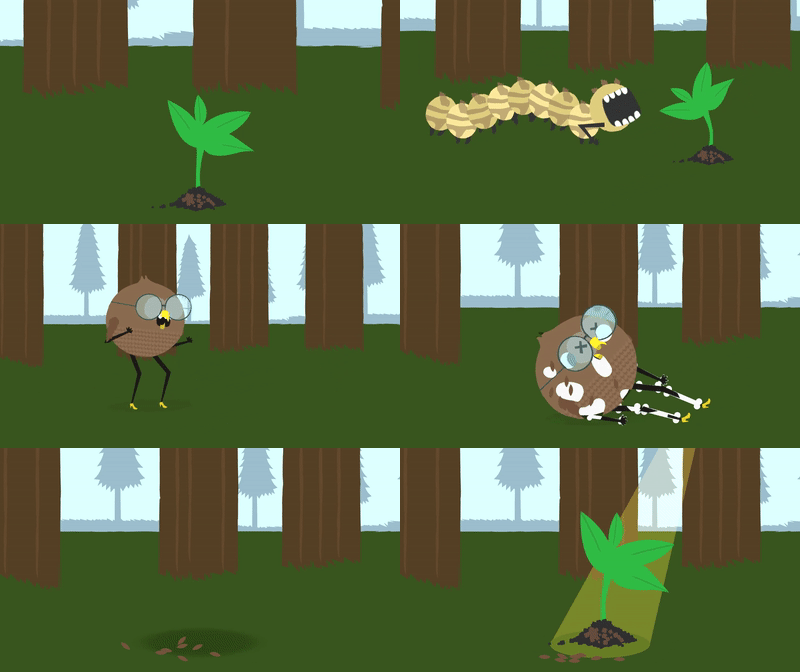
The circular economy is about rethinking the way we use resources and materials. In nature waste is used in the next part of the system.
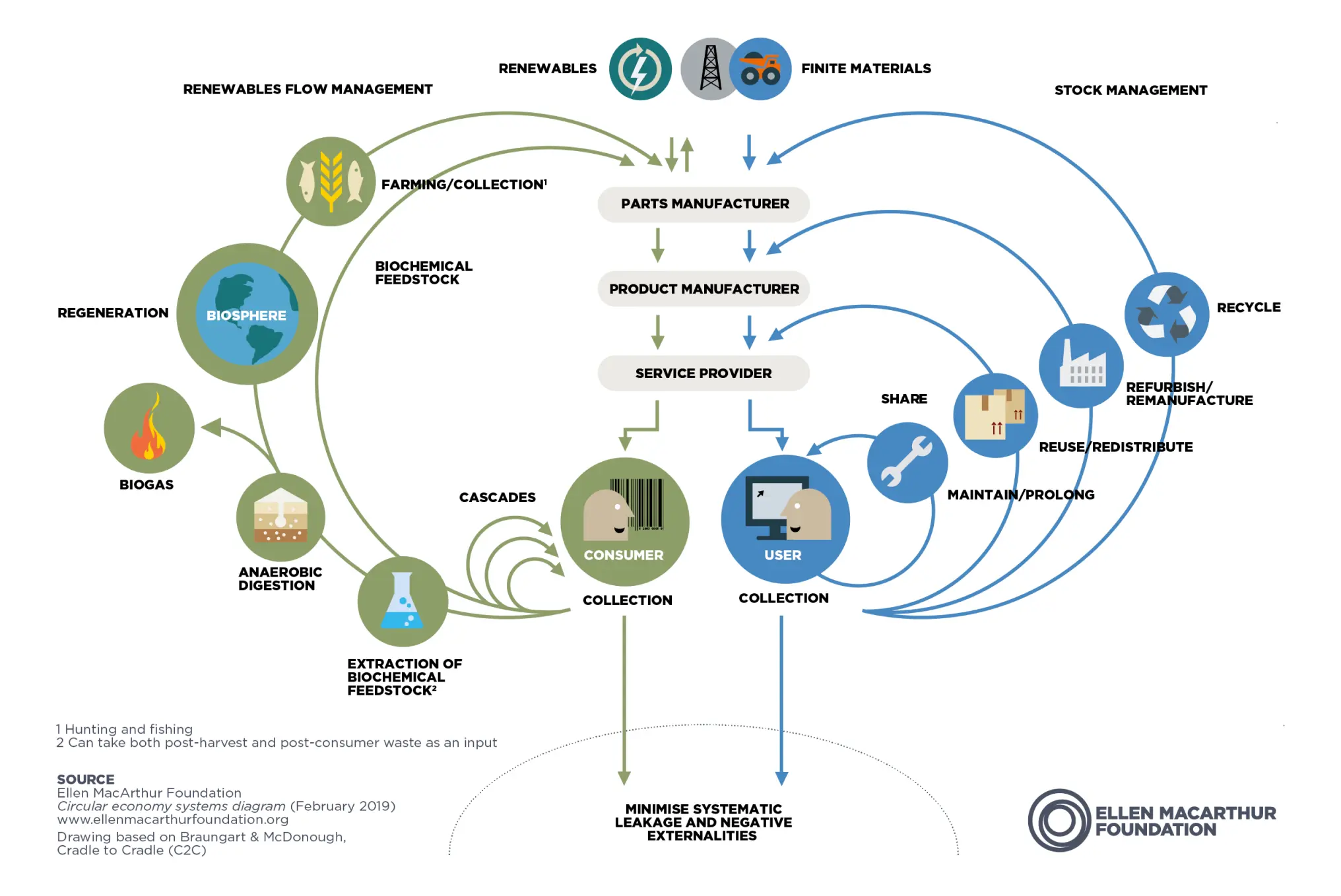
A circular economic system designed to eliminate waste and pollution by keeping products and materials in use for as long as possible, extracting the maximum value from them, and regenerating natural systems. This is achieved by shifting from a linear "take-make-dispose" model to a regenerative approach focused on reusing, repairing, refurbishing, and recycling existing products and materials, thereby reducing the need for new raw materials and minimising our impact on the environment.
See our Circularity Best Practice products for inspiring examples.
The basics: how it works
- Design for Circularity: Products are designed from the outset for longevity, repairability, and eventual disassembly for reuse or recycling.
- Resource Recovery and Reuse: Materials from discarded products are recovered and reused to create new products, or components are refurbished and reintroduced into manufacturing.
- Shifting to Services: Moving from product ownership to product-as-a-service models can increase product utilization and extend product life.
For real change, design is a key component. As outlined by Ellen MacArthur in this clip Close the Loop
Australia
A lot is happening in this space. Australia has released its Australia’s Circular Economy Framework and is now committed to doubling our circularity by 2035. See the CSIRO industry report (2024) and listen to ABC Radio National program ‘What would it take to transition Australia to a circular economy?’ (June 2025).
⭐ We all can make a difference to change the amount of waste we end up with. Like good product innovation, the way we live too, starts with intentional design. Simple everyday actions like choosing secondhand, passing on items and bringing your keep-cup along for your cuppa means you're part of the solution!